
METHODOLOGY FOR TRADERS & REFINERS
HOW WERE TRADERS & REFINERS ASSESSED?
The inaugural 2026 WWF–ZSL Palm Oil Traders & Refiners Index (POTRI) assesses 15 major palm oil traders and refiners against 100 environmental, social and governance indicators across 10 categories. Developed jointly by WWF and the Zoological Society of London (ZSL), it examines company commitments, evidence of implementation and reported progress towards more responsible palm oil supply chains.
Traders and refiners connect producers with downstream buyers and financial institutions. Their sourcing practices, purchasing decisions and supplier engagement give them significant influence across the sector. POTRI aims to strengthen transparency and accountability by helping companies, buyers, financial institutions and other stakeholders identify strengths, gaps and priorities for engagement.
The assessment framework draws on ZSL’s SPOTT methodology, WWF’s palm oil assessment tools and the Palm Oil Refiner Performance Assessment aligned question list. Companies were selected primarily for the scale of their palm oil sourcing and trading volumes and their role in the supply chain, with a focus on businesses operating in Indonesia and Malaysia. The first edition covers 15 companies to reflect the resources and capacity available.
COMPANIES HQ’S
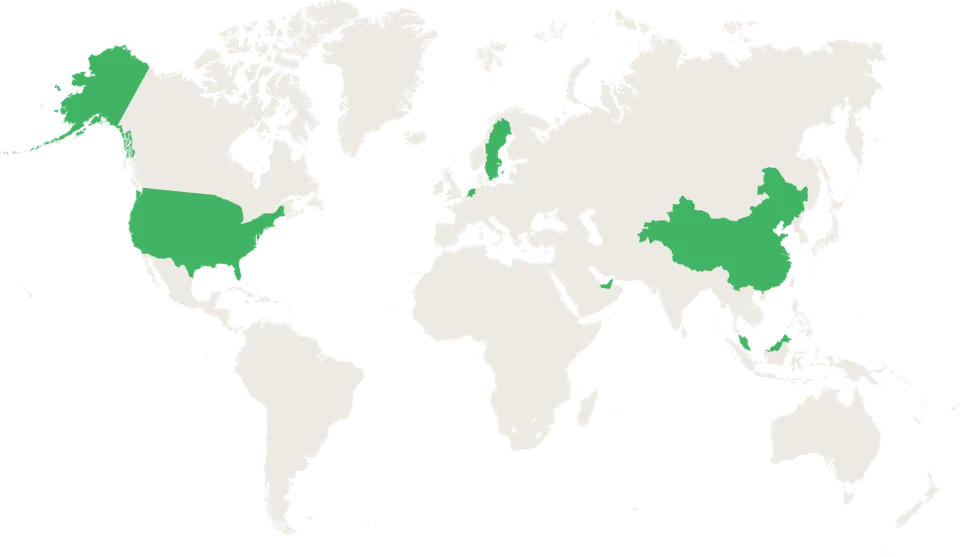
- 3companies HQ’S in North AmericaUnited States
- 2companies HQ’S in EuropeThe Netherlands, Sweden
- 10companies HQ’S in AsiaMalaysia, Singapore, China, United Arab Emirates
- 0companies HQ’S in Africa
- 0companies HQ’S in Australia
WHAT DATA DID WE COLLECT?
POTRI examines evidence on company policies and commitments, implementation, and monitoring, reporting and verification. The indicators cover sustainability leadership, supply-chain mapping and traceability, certification, deforestation and ecosystem conversion, biodiversity, peat and fire, greenhouse gas emissions, water and waste, human rights, smallholders, supplier engagement and grievance mechanisms.
Analysts reviewed company websites, policies, annual and sustainability reports, certification disclosures and other relevant sources. Assessed companies were invited to review their draft assessments and provide additional evidence or clarification before finalisation.
Publicly available evidence forms the basis of the assessment. Selected indicators also accept privately disclosed information, recognising relevant action that companies have not yet made public. Equivalent private evidence receives 50% of the points awarded to public evidence, maintaining an incentive for transparency. Confidential supporting documents are not published.
Most indicators award full, partial or zero points according to their specific requirements, including the scope, detail and recency of the evidence. Some indicators award points proportionally to reported percentages, such as traceability or supplier-engagement coverage. Indicators that do not apply to a company are excluded from its available score, and the overall result is expressed as a percentage of applicable points.
Scores reflect the evidence available against the assessment criteria. A zero score does not necessarily mean that no action takes place, and a high score does not certify that a company’s operations or supply chains are free from environmental or social harm.
RISK PROFILE CRITERIA
Each company assessment is accompanied by a risk profile providing additional context on company engagement, RSPO membership or certification status, negative media coverage and grievance cases.
The risk profile complements the indicator-based assessment and does not contribute to the company’s POTRI score. Media and grievance assessments consider the recency, frequency and severity of reported issues, alongside evidence of the company’s response. Reported allegations are distinguished from established findings, and the absence of identified reports should not be interpreted as evidence that no risks or impacts exist.
COMPANY ENGAGED
Company engagement indicates a willingness to participate in the assessment process, review findings, and provide additional evidence or clarification where appropriate. While engagement does not necessarily reflect ESG performance, it can be an indicator of transparency, responsiveness, and commitment to stakeholder dialogue. Companies that engage may be more likely to address identified issues and improve their practices over time.
Score
- YESIf a company provided feedback on its draft assessment.
- NOIf a company DO NOT provide feedback on its draft assessment.
suspension or membership termination
This section records whether an assessed company’s RSPO membership has been terminated or any of its RSPO certificates are currently suspended following a decision by the RSPO Complaints Panel.
Score
- SUSPENDEDTERMINATEDIf a company is suspended or terminated member of RSPO
- ACTIVEIf a company is an active member of RSPO
MEDIA RISK
Media risk considers publicly reported environmental, social and governance concerns linked to a company’s palm oil operations or supply chains. It assesses how recently concerns were reported, their frequency and severity, and the company’s response, including evidence of investigation, corrective action or remediation. Media coverage provides an external signal for further investigation. Reports may contain allegations that have not been independently verified or resolved, and differences in media attention can affect the information available for individual companies.
Criteria
Recency
- Negative media since 1 Jan 20254 points
- Most recent negative media between 2023–20243 points
- Negative media before 2023 only2 points
- No negative media1 point
Frequency
- > X articles/allegations since 20214 points
- X–Y articles/allegations since 20213 points
- < X articles/allegations since 20212 points
- No negative articles since 20211 point
Severity
- One ESG theme only3 points
- Operational issues only (fires, permits, minor incidents, accidents)2 points
- No negative issues1 point
Response
- No response / denies allegations without evidence4 points
- Limited acknowledgement, no evidence of action3 points
- Responds publicly and commits to investigate2 points
- Evidence of remediation1 point
Score
- HIGH0 - 4
- MED5 - 11
- LOW12 - 16
GRIEVANCE RISK
Grievance risk considers cases recorded through the RSPO complaints process. It assesses the recency and number of cases, the severity of the issues raised, and evidence of company engagement, case resolution and remediation. Both open and closed cases can provide relevant context. An open grievance does not, by itself, establish wrongdoing, while closure does not necessarily mean that every underlying concern has been resolved. The assessment considers the available information on case status and the company’s response.
Criteria
Recency
- New grievance opened within the last 12 months4 points
- Most recent grievance opened 1–3 years ago3 points
- Most recent grievance older than 3 years2 points
- No grievances1 point
Frequency
- >5 grievances (open and closed)4 points
- 2–5 grievances (open and closed)3 points
- 1 grievance (open or closed)2 points
- No grievances (open or closed)1 point
Severity
- Grievance relates to severe ESG issues such as human rights abuses, Indigenous Peoples’ rights, illegal deforestation, or multiple material ESG issues (open and closed)4 points
- Grievance relates to a single material ESG issue (e.g. labour rights, environmental harm, governance failures).3 points
- Grievance relates primarily to procedural, certification, or compliance issues with limited evidence of significant harm.2 points
- No grievances (open or closed)1 point
Response
- Open grievance(s) with little or no evidence of engagement, repeated delays, or failure to cooperate with the RSPO process.4 points
- Open grievance(s) currently under investigation or in active mediation, with no findings or outcome yet.3 points
- Responds publicly and commits to investigate2 points
- Evidence of remediation1 point
Score
- HIGH0 - 4
- MED5 - 11
- LOW12 - 16
SCORING CRITERIA
Sustainability policy and leadership
5 points5% of total
Traceability and supply-chain mapping
20 points20% of total
Certification standards
8 points8% of total
Deforestation, conversion and biodiversity
15 points15% of total
HCV, HCS and impact assessments
3 points3% of total
Peat, fire and GHG emissions
13 points13% of total
Water, chemicals and waste
4 points4% of total
Human rights and labour
16 points16% of total
Supplier engagement and smallholders
10 points10% of total
Governance and grievances
6 points6% of total